

This post was created in partnership with WorldTrips and features Atlas Nomad travel insurance. As always, we only work with brands we believe are genuinely useful for travelers, and all opinions expressed here are our own.
There’s a version of travel most of us picture when we’re planning a trip. Sun on our faces, backpacks stuffed with promise, and not a single thought about hospitals, clinics, or how hard it might be to find help if something goes sideways.
And then there’s the real version, the one that shows up without warning.
After more than twenty years traveling with kids in tow and often for months at a time, we’ve learned that things don’t just go wrong in theory. They go wrong in real life, and sometimes they go wrong spectacularly. We’ve had unexpected injuries abroad, illnesses that hit out of nowhere, and moments where we were standing in a foreign country thinking oh no, what now?
It’s in those moments that travel insurance stops feeling like a checkbox and starts feeling like the safety net it was always supposed to be. And it’s also the point where you notice a big truth that doesn’t always show up in brochures. Not all travel insurance is built for the way long term nomadic travelers actually move through the world.
Many popular travel insurance options are designed around short, fixed trips, which can leave gaps once you’re traveling for months or moving between countries.

This post looks at travel insurance from the perspective of lived through experiences. We’re talking real scenarios, real stress, and the kind of support that makes a bad travel day stay a story rather than turn into a nightmare. And we’ll look at why WorldTrips Atlas Nomad Insurance has become such a strong fit for travelers like us.
And we’ll look at how WorldTrips Atlas Nomad Insurance compares to other commonly used travel insurance options for travelers like us.
Because once you leave home for longer than a couple of weeks, you start playing, and paying, a different game.
Learn more about WorldTrips Atlas Nomad Insurance
Why travel insurance only really matters when real life shows up
Most people buy travel insurance because they think they’re supposed to. It’s tucked into the same part of the brain as extra passport photos and double checking whether the stove was turned off before you head out the door. You get it, hope you never need it, and assume it’ll be fine if something bad happens.
But travel has a way of handing you more than just the easy and fun things.
When you’re traveling for longer stretches, moving between countries, or settling into a place for a while, you take more chances. You walk strange streets. You try new food. You say yes to adventures. Your kids get excited and run ahead. And suddenly, the risks shift.
It’s not only lost luggage or a delayed flight. It’s medical care in a place where you don’t speak the language and they don’t speak yours. It’s needing treatment for something you can’t wait to sort out when you get home. It’s having no idea where to go or who to call at that exact moment you need answers fast.
This is where one of the big differences in travel insurance starts to show. Many policies are built around one type of journey. Fly out, stay somewhere familiar for a week or two, and come home. That can work perfectly well when the most complicated thing that happens is a missed connection or a sprained ankle on a beach.

But long term travel is not a neat seven day itinerary. Plans change. You add a new country on a whim. You stay longer because you like it. Instead of one destination, you might pass through five, ten, or twenty. The travel insurance that works great for a short vacation sometimes isn’t designed to stretch that far.
Over time, we learned that the kind of coverage you need for months abroad looks different than the kind you need for a weeklong holiday. It needs to be flexible when schedules shift. It needs to actually support you when something serious happens. And it needs to work in the real world, not just the ideal one.
We didn’t figure that out from reading thousands of insurance policy pages. We learned that by living it, sometimes the hard way, and by realizing how important it is to have insurance that won’t crumble when travel stops being carefree.
When things go wrong abroad
Travel teaches you quickly that the stories you bring home aren’t always the ones you planned. We’ve had our share of unforgettable adventures, but we’ve also had moments where everything stopped and we were forced to figure things out fast.
One of the latest wake up calls came in Mexico, where a group of stray dogs decided Charles looked like a tasty snack. One second he was walking back from a wedding, the next we were trying to decide whether he needed stitches and how to find a clinic that was open at 2am in the morning. We had no idea where to go, who to ask, or how serious the bites were. Standing in a dusty side street with blood running down his legs was a moment he won’t soon forget.

Years before, on a relaxed family trip in Greece, our son cut his ear in a playground. Kids fall all the time, but abroad even a simple cut turns into a rush of questions. Could we get it cleaned properly? Would a regular clinic take us? Was there a hospital nearby or would we need to travel? What would it cost if we walked in and didn’t know the system?
Besides for the blood, It wasn’t an incredibly dramatic injury on the big scale of things, but it did require a bunch of stitches and was a lot to juggle when we were dealing with a different language and none of our usual comfort zones. Did we mention that Greece was also in the middle of a country wide hospital shutdown emergency?

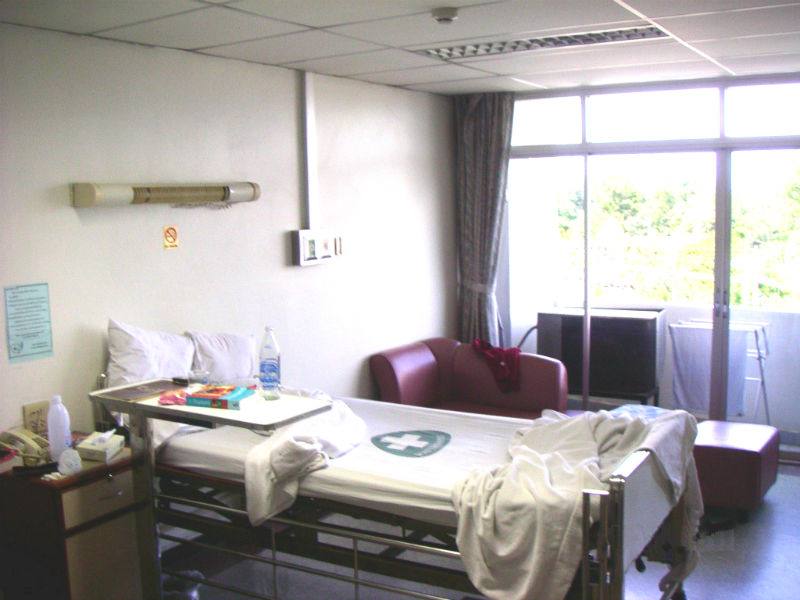
Thailand was harder. Micki got hit with a kidney infection that escalated quickly. In the space of two days she went from feeling off to needing treatment, and fast. Finding care in a place where you don’t speak the language while you’re shaking with fever is humbling. Doing it while on a remote island without even a clinic is even tougher. There’s nothing like trying to decipher symptoms, hospitals and an emergency boat ride while barely staying upright.

And then there was altitude sickness in Quito, Ecuador, when our daughter suddenly had a terrible headache. We weren’t prepared for how quickly it came on or how intense it could be. While we were giving her electrolytes and getting her to rest, we were simultaneously Googling the nearest clinic.
Add a foreign country and you’re managing panic, logistics, and the reality that your child needs care right now. It turned out to be a minor case of altitude sickness that resolved itself even before we needed the clinic, but for a while we were in full emergency mode.

These moments are burned into our memory not because they were the worst days we’ve had, but because each one reminded us how far from home we really were. When something goes wrong abroad, there’s a different level of fear, uncertainty, and urgency involved. You don’t know where to go, how to get help, or what the system even looks like.
Travel has always been worth the risk for us, but these experiences made something clear. Travel insurance isn’t just a line item on a planning checklist. It’s the piece that lets you keep going with confidence even when the unexpected shows up.
How WorldTrips Atlas Nomad Insurance fits real life travel
After enough years of travel, we stopped asking which insurance looked good on paper and started asking a different question.
Does this actually make sense for the way we travel?
That’s where WorldTrips Atlas Nomad Insurance started to stand out for us. It’s designed with long term and international travelers in mind, not just people heading off on a quick one week break.
Here are a few things that made it feel different from a lot of typical trip focused plans.
Learn more about WorldTrips Atlas Nomad Insurance
Built for longer, more flexible travel
Many travel insurance policies assume a classic pattern. You book a flight, stay somewhere for a short window of time, then fly home. That can work for a simple vacation, but it doesn’t always match how long term travelers move.
Atlas Nomad is created for people who are outside their home country for longer stretches and may be moving between destinations. That structure matters if you’re slow traveling, working remotely as you go, or not ready to commit to a tidy start and end date when you first leave.

Focused on medical needs while abroad
When something goes wrong overseas, medical care is usually the biggest concern. The stories that stick with us aren’t about delayed luggage. They’re the bites, cuts, breaks, infections, and altitude scares.
Atlas Nomad is a travel medical plan, which means its purpose is to help with unexpected illnesses and injuries while you’re away. Where some trip policies focus heavily on prepaid cancellation and lost bags, this one leans into support that long term travelers rely on most.
Designed for real world use
The moment you need help is rarely calm. You’re not at home with a laptop and time to read fine print. You’re on a street or in a hotel room weighing decisions fast.
That’s where the structure behind a plan becomes real. With Atlas Nomad, you’re not just buying numbers on a page. You’re getting access to a support system you can call on when something goes sideways in another country.
Compared broadly with more traditional policies, Atlas Nomad feels like it was designed for people who are out in the world more often and for longer, instead of for a once a year vacation.
Air Doctor telehealth access
One feature that really caught our attention with Atlas Nomad is access to the Air Doctor telehealth app.
If you’ve ever been sick abroad, you know sometimes the hardest part isn’t the illness, it’s the questions. Is this serious? Do I need a doctor right now? Where do I go? Can I wait and see how I feel tomorrow?
Air Doctor helps bridge that gap. Instead of guessing, you can connect with medical professionals while you travel and get guidance without immediately navigating clinics or hospitals on your own.
Many other travel insurance options don’t include any kind of telehealth access, which means you’re left guessing until you’re already sitting in a clinic.
For long term travelers, that kind of support can make a stressful moment feel manageable.
You’re in Thailand, running a fever, trying to judge whether you should get to a hospital. A conversation with a doctor through Air Doctor gives clarity fast.
Your child starts struggling with altitude sickness while in Quito. You don’t know if it’s mild or something more serious. A medical professional who understands travel cases can help you figure out your next step.
Or, you’re dealing with something minor and don’t want to spend half the day sitting in a foreign clinic if you don’t have to. Telehealth can help you assess your situation safely and often much quicker than standing in a long lineup.
Where some plans focus mainly on reimbursement after the fact, Atlas Nomad offers both coverage and an on the ground resource you can lean on, which isn’t something every travel insurance option includes. When you’re 10 thousand miles from home, that’s a nice thing to have handy.

Who WorldTrips Atlas Nomad Insurance is for
There’s no one size fits all answer when it comes to travel insurance. What works perfectly for someone taking a two week getaway might not make much sense for someone moving between countries for half the year.
Atlas Nomad is a strong match for travelers who:
- Stay abroad for longer stretches of time
- Move between multiple destinations instead of sticking to one
- Prefer slow travel and don’t always know how long they’ll stay
- Work or study remotely while outside their home country
- Want support focused on medical care rather than prepaid costs
- Care more about real world flexibility than rock bottom pricing
- Who like zero deductible plans with coverage up to $250,000 depending on plan selection
- Currently available for travelers between 14 days old and 69 years of age
This is very different from insurance companies that have plans designed primarily for short vacations with fixed dates and prepaid costs.
If your travel plans unfold over weeks or months instead of days, your needs are different. Atlas Nomad is designed to meet the kinds of trips that shift, stretch, and evolve as you go.
That said, it is limited in where it can be sold currently. As their site says: The Atlas Series is available to travelers who are at least 14 days old and traveling outside of their home country, unless physically located in the states of New York, Maryland, or Washington or in the countries of Canada or Australia at the time of purchase. In those cases, coverage may still be available as long as you’re already traveling when you purchase.

Travel with backup you can use
Every long term traveler eventually learns that things go wrong. It’s not a matter of if. It’s when, and how well you’re supported when it happens.
We’ve spent years collecting our favorite travel memories, but many of the lessons that shaped us came from the surprises. The kidney infection. The hospital run. The frantic search for help. And yes, the dogs in Mexico who will get talked about long after the 20+ needles for rabies Charles ended up getting fades into the background.
Those moments changed how we think about insurance. Not as something you buy to meet a requirement, but as something that sits quietly in the background until you need it.
WorldTrips Atlas Nomad Insurance feels like an option built for real travelers. The ones who stay longer. Move more freely. Change plans without warning. And occasionally need help faster than Google Translate can kick in.
You can check WorldTrips Atlas Nomad Insurance here and see if it fits the way you travel.
Learn more about WorldTrips Atlas Nomad Insurance
If you want a full breakdown, including how it stacks up against more traditional travel insurance plans, we’ve gathered everything in one place.
Travel will always come with risks. The right backup turns those surprises into stories you’ll tell for years.